
The BMS is not a life safety system
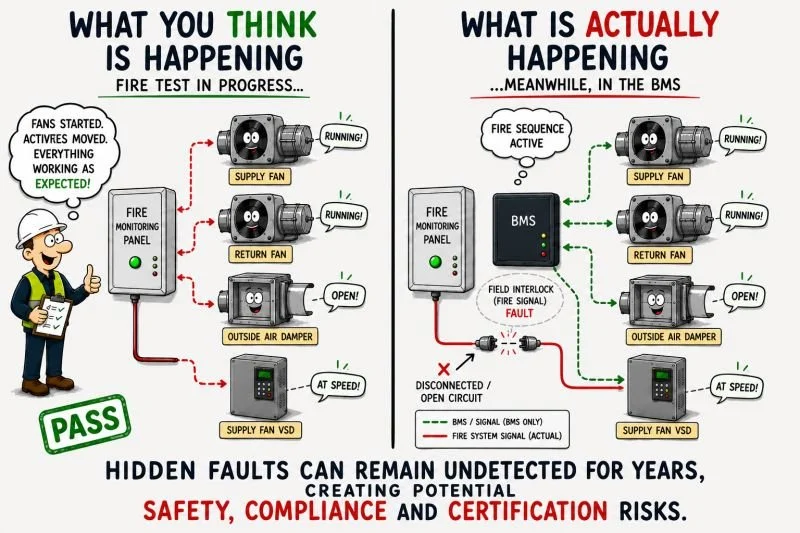
The BMS is not a certified life safety system. It was never designed, tested or maintained to that standard.
When reviewing new builds or auditing existing building sites I continually come across the statement "the BMS shall mimic the fire operation". Every time I see it, I wonder if anyone involved truly understands the implication.
Here's the uncomfortable truth. If the BMS mimics the fire sequence and a fire interlock fails due to a physical fault, this defect will likely not be picked up during routine fire testing.
Therefore, in an actual emergency, the BMS becomes the last line of defence. A non life safety system that may or may not be on essential power and definitely not using fire rated cable.
And to me that's a scary thought.
But it gets worse. When the firefighter arrives to assess the situation, they believe the fire control system is operating. But in the scenario described, the BMS can unintentionally execute its own sequence in the background. The outcome at that point becomes dangerously unpredictable.
This convention is a relic of the past, yet it is continually reintroduced in new builds simply because "it was done before". Nobody stops to question why. The implications are more serious than most realise.
In a fire event, the BMS should park itself. Allow the dedicated fire system to take control through its interlocks and execute the sequence it was certified to perform. This question should be raised at the start of every new project, not resolved during commissioning.
When did you last question what your BMS actually does in a fire? Does your fire testing strategy specifically address the hidden risk described. I'd confidently argue most don't.