What is dew point control actually for?
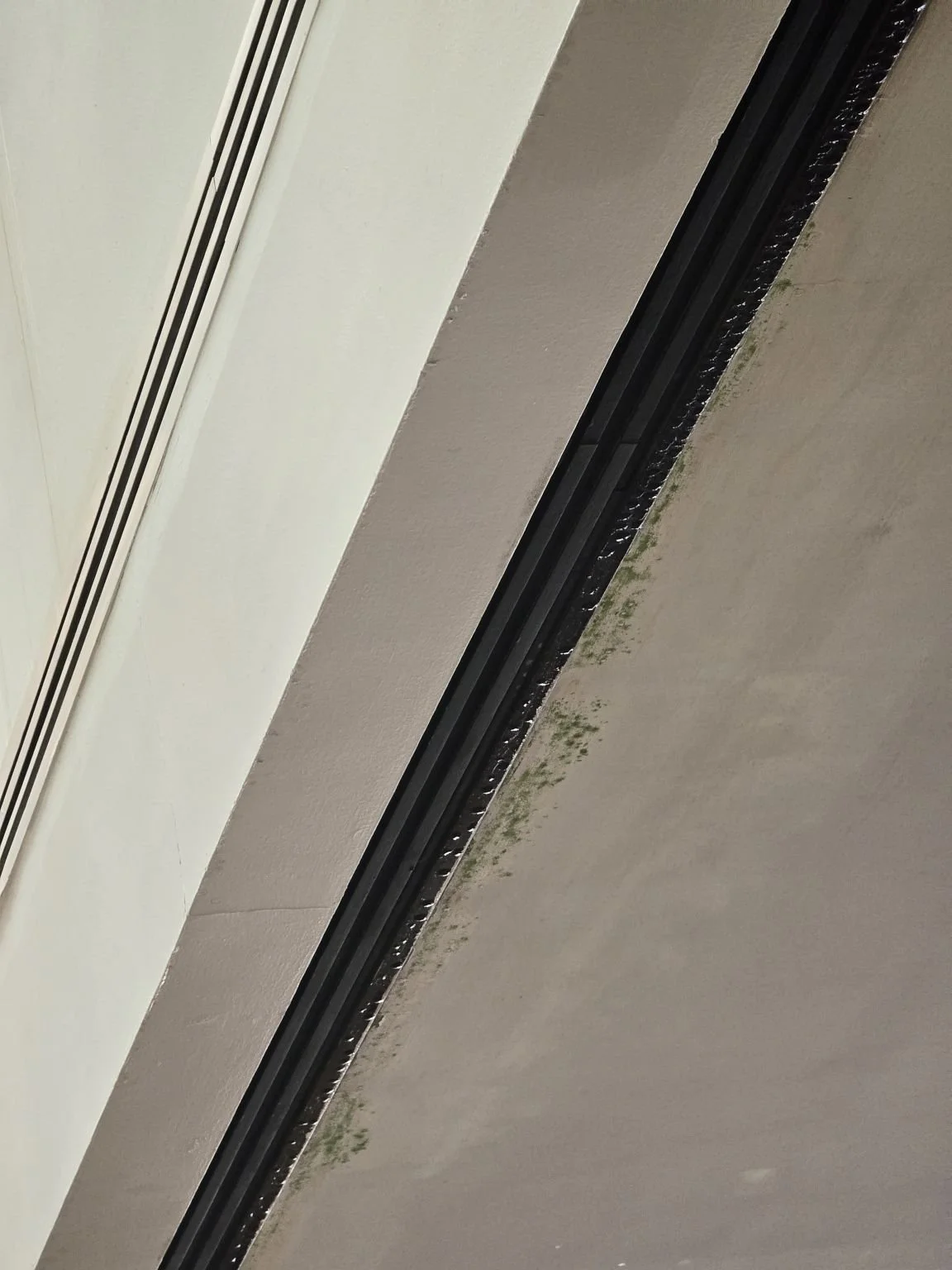
While trying to relax on a long overdue holiday, I felt a drop of water hit my arm in a hotel lobby. I like everyone else hate that unexpected feeling and think of the worst.
There's green growth on it, so it has been wet for a long time. Polished floors below, people walking across them, I suddenly think about the BMS implications back home. So much for switching off.
So it's a good reminder of what dew point control is actually for.
Air holds moisture, and if a surface gets colder than the point where the air gives that moisture up, water forms on it. Do that in an occupied building and you get mould that keeps returning until the moisture stops. There're other valid concerns but mould usually gets the most attention with tenants. This suddenly becomes a tenant retention problem very quickly.
Preventing it means taking the moisture out of the air before it's delivered. The only way to do that is to chill the air until the water falls out, which leaves it colder than the space needs, so it gets warmed back up before it's supplied. You pay to take the heat out, then you pay again to put some of it back.
On a humid day the moisture is the bigger half of that job. Cooling the air is the part you'd expect to pay for. Stripping the water out of it costs more than the cooling does, which in some environments is a major ongoing cost to building owners.
So there's a number in the strategy deciding how far down to strip, and it's expensive to get wrong in one direction and embarrassing to get wrong in the other. Set it too tight and the building quietly spends more than it needs to. Nobody can feel dew point, nothing alarms, and no one ever finds out. Set it too loose and you get this.
That's why the number is usually conservative on the jobs I've worked on here, and why nobody has gone back to ask whether it still needs to be. More on that in the next post.